Planting calendar
Timing that reflects local seasons and nursery availability.
Landscape design, planting and practical irrigation plans for homes, compounds and workspaces across Greater Cairo.
Explore our approach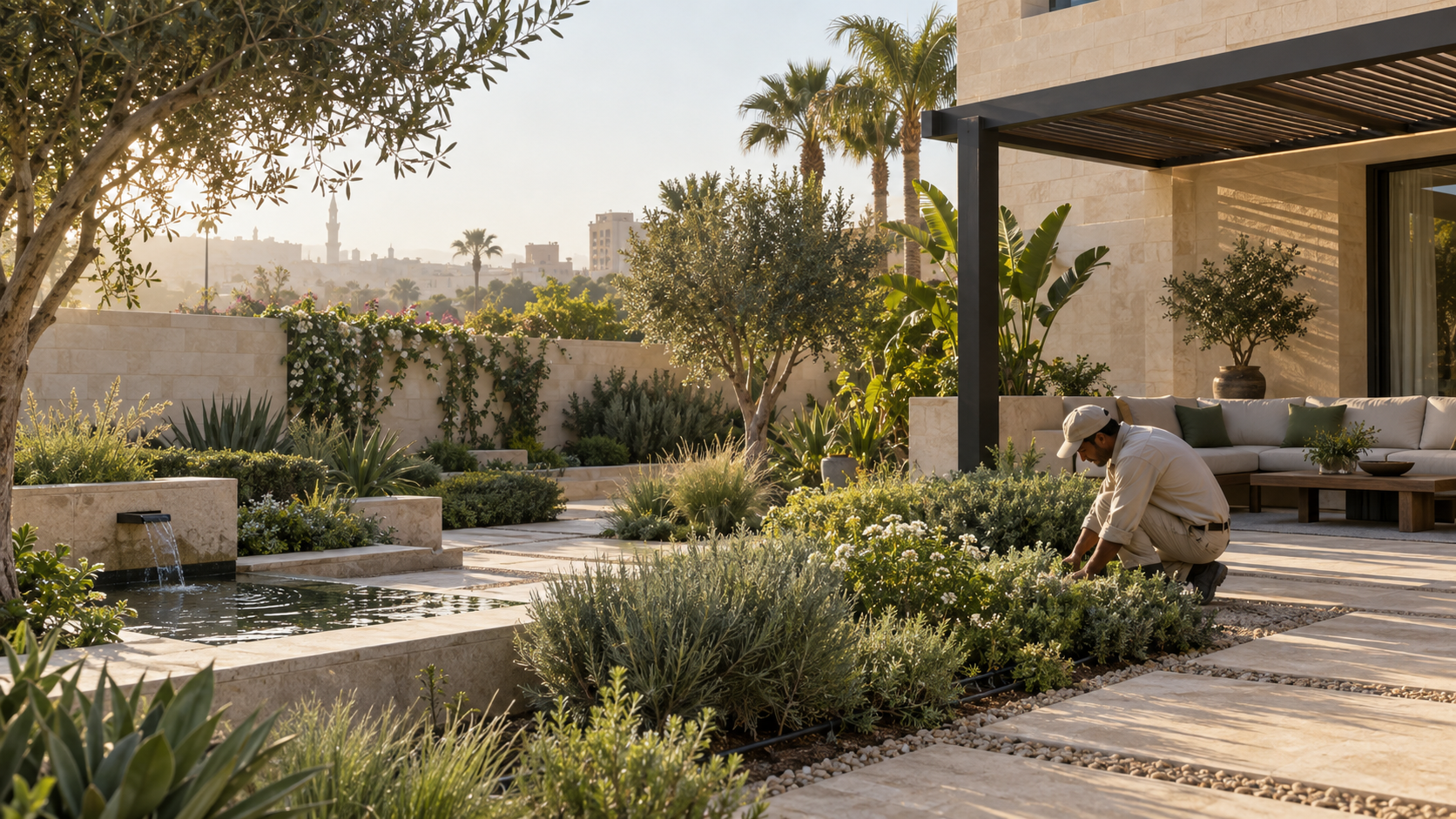
We start with the site: sun, soil, access and the way people will use the space.
01 / 03We combine site planning, soil preparation, planting and irrigation into one practical scope.
02Our project notes explain what was planted, how water moves and what the garden needs through the year.
Existing gardens are documented before removal is proposed. A healthy tree, established hedge or functioning paved route can anchor the revised plan, saving time and preserving shade that would take years to replace. Where a plant is struggling, we first separate irrigation, soil, exposure and maintenance causes instead of treating replacement as the automatic answer.
At handover, planting zones are named, valves are identified and recurring tasks are written in ordinary language. Owners and maintenance teams can see which decisions protect the design and which details may adapt as the garden matures.
Photographs taken from agreed viewpoints create a simple seasonal record. They help distinguish normal change from a recurring problem and keep future decisions connected to the original purpose of each planted area.
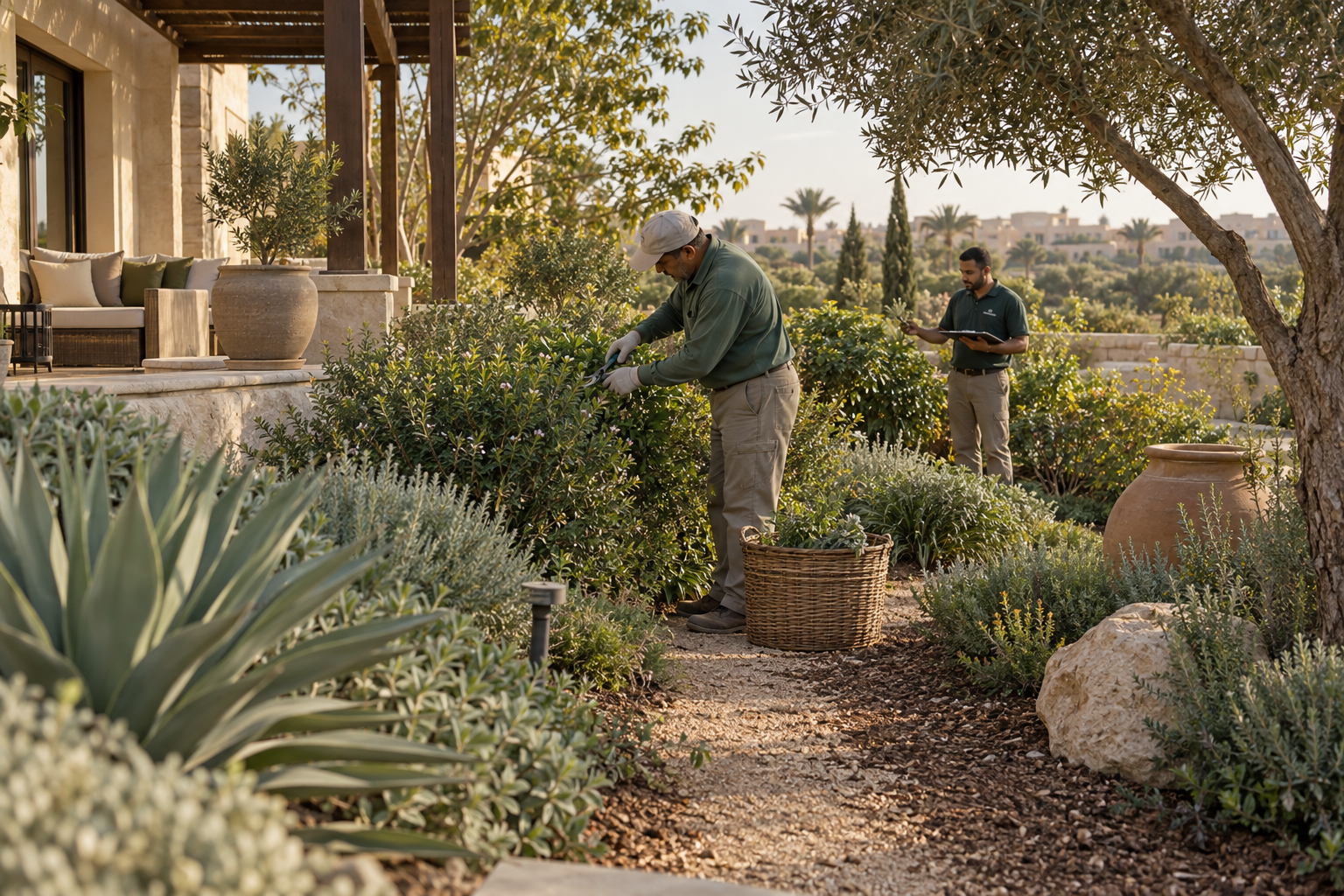
03Monthly visits focus on pruning, irrigation checks, soil condition and the next seasonal change.
Timing that reflects local seasons and nursery availability.
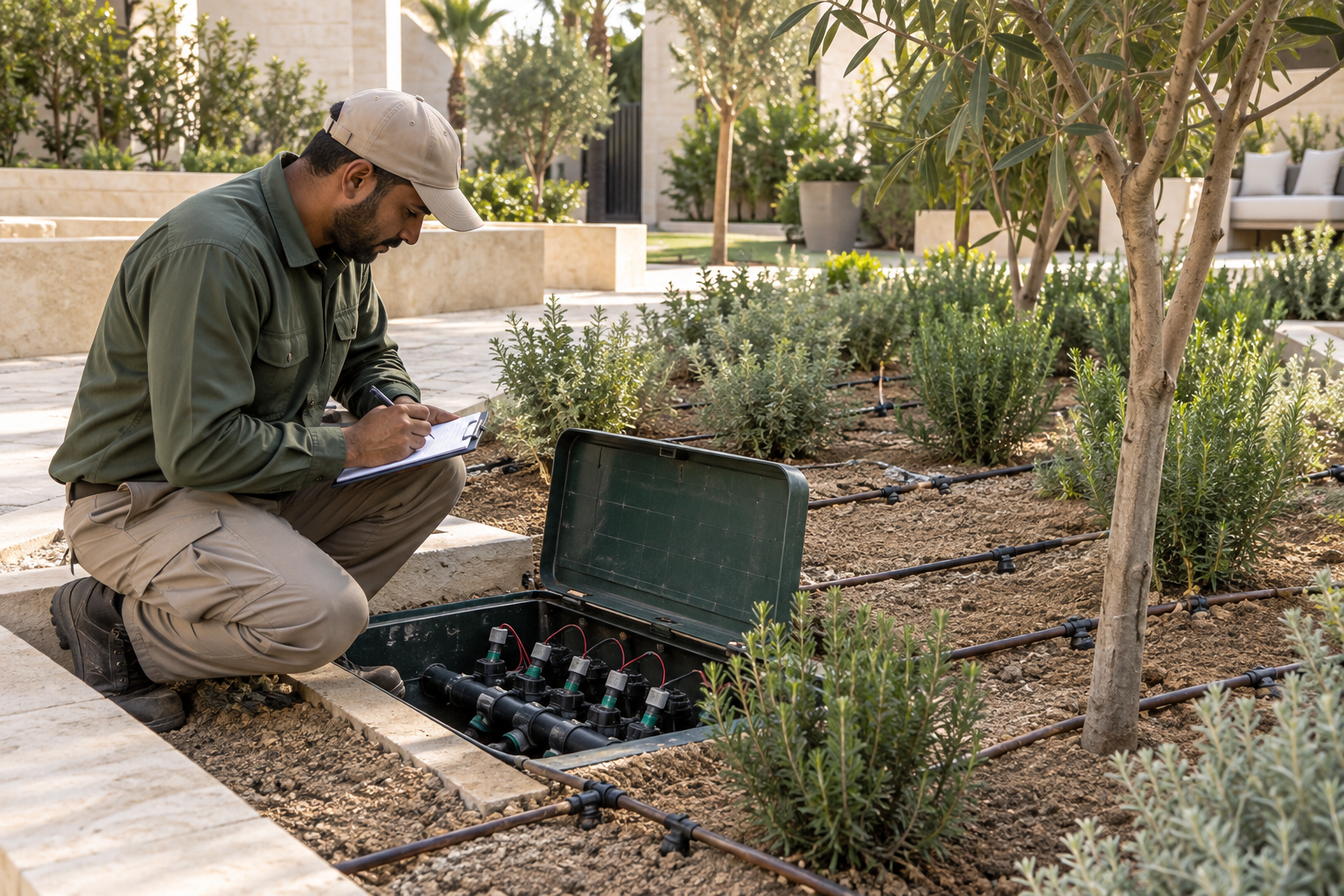
Zones, emitters and schedules are matched to the planting plan instead of added as an afterthought.
A useful landscape plan starts before plant names are discussed. During the first visit we record sunlight at different edges of the plot, reflected heat from walls and paving, prevailing wind, existing levels, water pressure, drainage points and the routes used by residents, children, pets and maintenance staff. These observations decide where shade is valuable, which beds can support denser planting and where a simpler surface will be easier to live with.
Cairo plots often contain imported fill, compacted construction layers or pockets of soil with very different drainage. We open representative areas, check texture and depth, and recommend improvement only where it will make a measurable difference. The aim is not to replace everything. It is to create reliable root zones, protect building edges and direct excess irrigation away from hard surfaces.
Our palettes combine structural trees, resilient shrubs, groundcover and seasonal accents. We consider mature width, leaf drop, thorns, scent and the amount of pruning a species needs. A courtyard beside a family dining area needs a different mix from a compound entrance exposed to traffic dust. Nursery availability is checked before the final planting schedule is issued.
Hydrozones group plants with similar needs. Drip lines, filters, valves and accessible inspection points are shown alongside the planting plan, not hidden in a separate afterthought. We set an initial programme for establishment and explain how it should change through hot weather, cooler months and periods when the garden is unused.
New planting needs observation while roots establish. Our handover notes identify what to watch during the first weeks: moisture below the surface, settling around root balls, blocked emitters and early signs of stress. Maintenance teams receive a simple schedule for pruning, feeding and irrigation review rather than a generic instruction to “water regularly.”
For ongoing care, each visit has a purpose. In spring we shape growth and check the system before temperatures climb. Summer work concentrates on irrigation performance, shade and plant stress. Autumn is useful for soil improvement and selective renewal. Winter allows structural pruning and preparation for the next cycle. After every planned visit, the client receives concise notes on completed work and decisions that need approval.
Fetesap Landscapes works across Greater Cairo, including New Cairo, Maadi and established residential compounds. Access times, service entrances and community rules are confirmed before crews or materials arrive. That local planning protects the garden, the property and the day around the work.
Read the seasonal care plan